A Wedding Invitation, Read Before You Choose an Outfit
Read a wedding invitation for dress code, venue and tone, then choose an outfit that feels appropriate without relying on a universal formula.
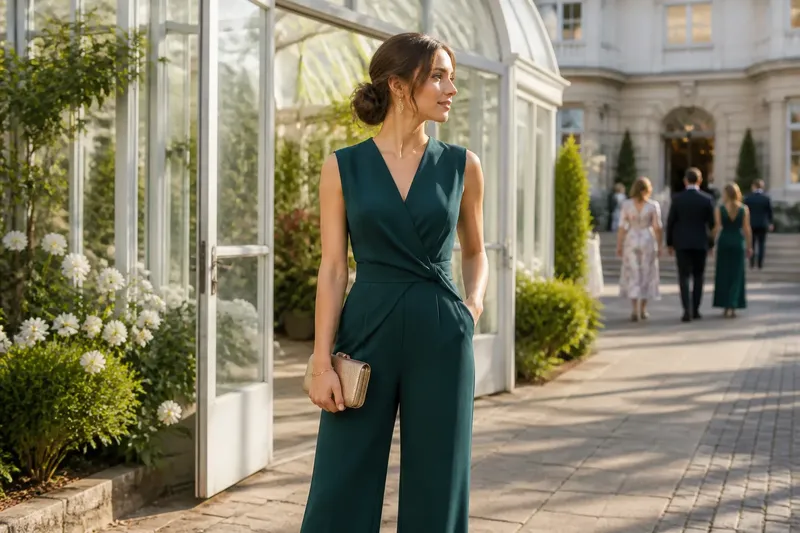
What should you wear when a wedding invitation says “cocktail attire,” but the ceremony is at a garden venue and the reception moves indoors? Reading a wedding invitation for dress clues means treating its wording, setting and schedule as parts of one message, rather than searching for a universal outfit formula.
Imagine you have been invited to a late-afternoon wedding at a conservatory, followed by dinner in a nearby hotel ballroom. The invitation says “cocktail attire,” names the garden entrance as the ceremony location and mentions a short walk between venues. You own a dressy jumpsuit, a floral midi dress and a formal floor-length gown. The task is to decide which one belongs, and what details make it work.
Start With The Wording
“Cocktail attire” is the clearest instruction here. It generally points toward polished occasion wear, rather than everyday clothes or the most formal evening options. It does not dictate a particular hemline, fabric or gendered outfit.
Read the whole invitation for additional signals. Phrases such as “black tie,” “formal” or “festive attire” narrow the possibilities in different ways. A note about cultural dress, a requested color, or an outdoor ceremony may add useful context. Treat explicit requests as stronger evidence than your guess about what a wedding usually looks like.
In this invented situation, the jumpsuit and floral midi dress could both fit cocktail attire. The floor-length gown may feel more formal than the wording calls for, though a restrained design could still be appropriate. The useful question is not “Which garment is technically allowed?” but “Which option matches the stated level without making the event feel like a different one?”
Read The Venue Clues
A venue can tell you about practical demands that a dress code leaves open. A conservatory suggests glass, plants and possibly paths or damp ground near the garden entrance. The hotel ballroom points toward a more polished setting for dinner. Neither setting cancels the invitation’s wording; together they help clarify how to interpret it.
Consider the route between places. A delicate shoe that works on a smooth ballroom floor may be awkward on grass or gravel. A long hem can collect moisture outdoors. A light wrap or jacket may help if the ceremony space feels cooler than the reception, while a compact bag can keep hands free during the walk.
For the imagined guest, the jumpsuit has a clean line and works with a dressier shoe, while the midi dress has a flowing skirt that may catch on garden paths. That does not make the dress wrong. It does mean the guest should consider the actual surface, footwear and ability to move before settling on it.
Check the venue’s description and map, not just its name.
Notice The Event’s Tone
Tone is the less literal clue: an invitation’s design, wording and schedule can suggest whether the couple is aiming for a restrained ceremony, a lively party or a relaxed gathering. These signals should refine your reading, not override a clear dress code. Decorative script alone is not proof of black tie; invitations can be ornate for reasons unrelated to formality.
Look for the combination. A formal printed invitation, an evening start and a seated dinner may point toward a more dressed-up interpretation of cocktail attire. A daytime ceremony, casual wording and an outdoor meal might support a softer one. If the clues disagree, give more weight to the explicit dress instruction and ask the couple or a member of the wedding party if the distinction matters.
Here, the late-afternoon ceremony and ballroom dinner suggest a change in atmosphere across the event. The guest can answer that with considered details rather than a complete costume change: for example, a tailored jumpsuit with refined earrings and a small evening bag. The outfit remains appropriate to the stated code while looking at home in both settings.
Choose The Outfit
Now compare the three options against the invitation. The floral midi dress may suit the conservatory, but its print and cut might read more daytime than the ballroom dinner. The floor-length gown risks feeling more formal than “cocktail attire” requires. The jumpsuit offers a middle ground if its fabric, fit and accessories look intentional rather than office-like.
That is not a rule that jumpsuits are always the answer. It is a decision based on this guest’s available clothes and the particular clues. Someone whose best cocktail option is a dress could make the same interpretation with a structured shape, dressier shoes and a wrap.
Check the details as a set:
- Dress wording: Does the outfit match the named level of formality?
- Venue surfaces: Can the shoes and hem handle the route from ceremony to reception?
- Time and schedule: Does the outfit feel right for both the ceremony and dinner?
- Movement: Can you sit, walk and dance without constant adjustment?
- Finishing pieces: Do the bag, jewelry and outer layer support the occasion rather than pull it in another direction?
If a choice fails one of these checks, change the piece that causes the problem. A block heel can replace a narrow heel; a lighter wrap can replace a heavy jacket. Small adjustments often resolve a mismatch more neatly than starting over.
Questions About Dress Clues?
What does cocktail attire mean for a wedding?
It usually means polished occasion wear that sits below the most formal evening dress codes. A dress, suit or dressy jumpsuit can work, depending on its cut, fabric and finishing details.
Should the venue decide what I wear?
Use the venue to interpret practical needs and refine the invitation’s tone, not to replace its dress instruction. Paths, weather exposure and a change of setting can matter as much as the room’s appearance.
What if the invitation has no dress code?
Combine the venue, time of day, ceremony style and reception plan to estimate the formality. If the clues remain unclear, ask someone close to the couple rather than making the most formal option your default.
Can I wear a jumpsuit to a wedding?
Yes, when its level of polish suits the dress code and the event. Tailoring, fabric and accessories help distinguish an occasion-ready jumpsuit from one intended for work or everyday wear.
Make The Last Check
Before leaving, look at the outfit as a complete set under ordinary indoor light. Check whether the shoes suit the route, whether the outer layer works with the silhouette and whether any piece draws attention for a reason unrelated to the celebration. The imagined guest chooses the jumpsuit, adds dressy earrings and a compact wrap, and carries comfortable shoes for the walk between venues. That choice follows the invitation’s wording while respecting its setting.
When reading a wedding invitation for what to wear, separate what it says from what the venue implies, then use the schedule to settle any remaining doubt. If those clues still conflict, a brief, considerate question is more useful than a closet full of increasingly formal guesses.