The Trouser Turn-Up’s Changing Place in Tailoring
The history of the trouser turn-up traces a shift from practical fold to tailored finish, helping you judge what the detail means for trousers today.
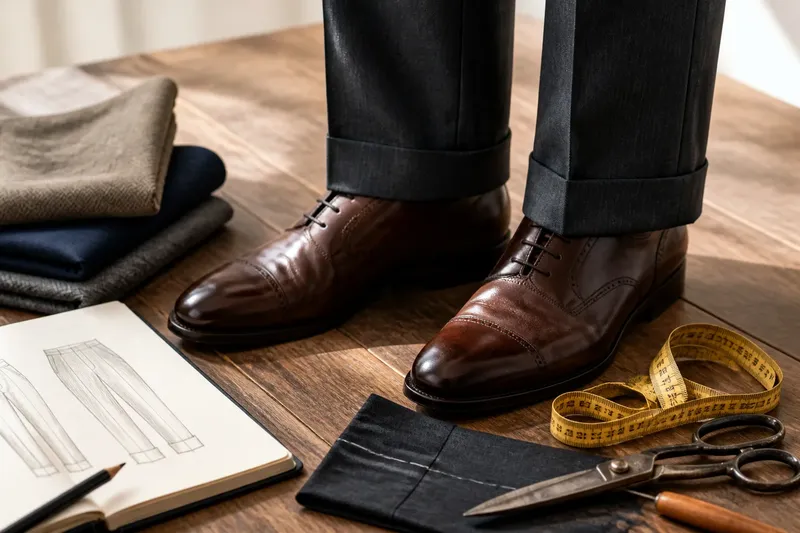
Should your trousers have a turn-up? The history of the trouser turn-up offers a useful answer, but not a rule: a folded hem can begin as a practical choice and later become part of a tailored look. Its place in clothing has changed along with the purposes people assign to it.
From fold to finish
A turn-up, also called a cuff, is a folded band at the bottom of a trouser leg. The fold adds fabric and gives the hem a more visible edge. It can also add weight, which changes how the leg falls and where the eye settles.
That combination helps explain the detail’s enduring appeal. A fold can keep the edge of a trouser leg from dragging through dirt or catching on wear. In tailored clothing, the same feature can be made deliberately and retained for its shape, even when keeping the hem clean is no longer the main concern.
Clothing details often acquire new uses without losing every trace of their earlier ones. The turn-up’s history is best understood as overlapping practical and sartorial choices, not as a neat progression from utility to decoration.
Practical beginnings
One familiar account links turn-ups to the need to keep trouser hems clear of muddy or wet ground. It is easy to see why the explanation persists: folding fabric upward can lift the edge away from dirt, and a fold can sometimes be let down to provide more length.
That plausible use does not establish a single inventor or a universal origin. A wearer might fold a hem for convenience, while a tailor might build a cuff into a garment as a considered finish. Both actions can occur in the history of a clothing detail without one explaining every version of it.
As tailored trousers became associated with more deliberate dress, cuffs could function as an intentional element of construction. They offered a visible band at the ankle and a way to finish the leg. The practical explanation and the tailoring explanation are not rivals so much as accounts of different uses.
When an origin story sounds unusually tidy, ask what period and use it actually describes.
Tailored conventions
In tailored dress, the cuff became a recognizable option rather than an improvised fold. Its presence could suggest attention to finish and connect a pair of trousers with traditional tailoring. Those associations were never universal: clothing conventions vary by setting, and a detail rarely carries the same meaning for every wearer or observer.
A cuff also changes the visual proportions of trousers. The band marks the lower edge clearly, while the added fabric can make the ankle area feel more substantial. That effect may suit a straight leg and tailored cloth; on a narrow leg, it can look crowded.
The meaning of the detail therefore depends on more than its earliest practical use. Tailoring, fabric, silhouette and the surrounding outfit all shape what a cuff communicates now.
Reading origin stories
Accounts of turn-ups often answer different questions. One may describe a useful way to keep a hem out of dirt; another may explain why cuffs became a tailored finish; a third may focus on the social impression they created. Each can be informative if its claim is kept within its proper scope.
Say you hear that cuffs began because people wanted to avoid muddy streets, then read that they became a mark of careful tailoring. The first account offers a practical use; the second describes a later role the detail could take on. Neither claim, by itself, gives a complete history.
Prefer accounts that distinguish a plausible explanation from a documented claim and that name the context they address. A single anecdote may be memorable, but memory is not a particularly reliable tailor.
Choosing a finish
For a present-day choice, begin with the trousers. A cuff can suit tailored wool trousers by giving the leg a defined endpoint. On lighter fabric or a narrow silhouette, a plain hem may create a quieter line. Neither option is inherently more correct; the garment’s proportions and your preference matter more than an origin story.
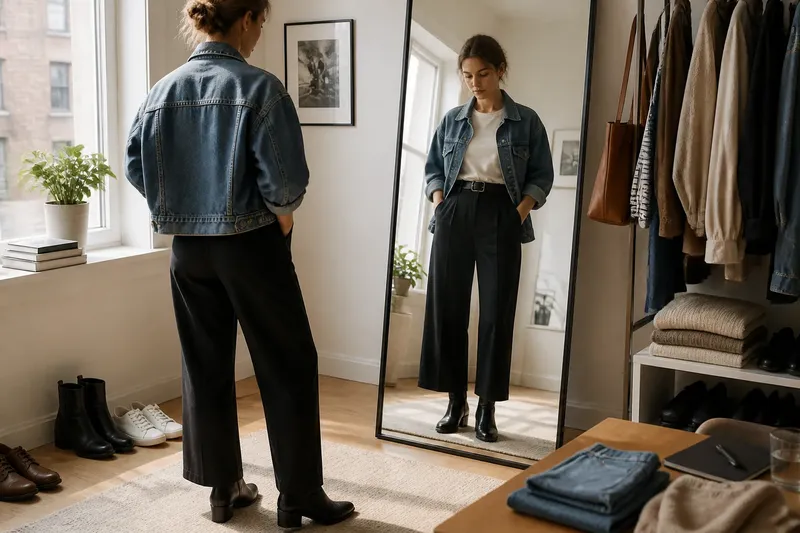
Shoes help determine how the lower edge reads. A cuff can balance a substantial shoe, while a plain hem may look less busy with a slim one. Check the full outfit in a mirror, including how the trousers fall when you stand and sit.
Imagine you have charcoal, straight-leg trousers and are choosing between a cuff and a plain hem. You want the shoes to remain visible and the outfit to feel composed rather than especially formal. Compare both finishes with the shoes and jacket you actually wear: if the cuff makes the ankle look crowded, the plain hem better serves that aim; if the lower edge seems unfinished beside the shoes, the cuff may provide the balance you want.
For your own trousers, the history of the trouser turn-up is context, not a dress code. Choose the finish that suits the fabric, the line of the leg and the setting where you plan to wear it.
Turn-up questions?
Are turn-ups and cuffs the same thing?
In ordinary clothing language, “turn-up” and “cuff” usually refer to the folded finish at the bottom of a trouser leg. Usage varies, but the distinction rarely changes the styling choice.
Were turn-ups invented to keep trousers clean?
Keeping a hem clear of dirt is a plausible practical use often associated with the detail. It is safer to treat that as one part of the story than as a complete, settled account of its origin.
Do cuffs make trousers more formal?
They can give tailored trousers a traditional or deliberate appearance, but formality depends on the whole outfit and setting. Cloth, cut, shoes and dress expectations all affect how the finish reads.
Can a tailor remove a cuff?
Sometimes, but the result depends on the garment’s construction and how much fabric remains. Ask a tailor to inspect the trousers before deciding, especially if a new hem may leave limited length.
Construction and context
The long history of the trouser turn-up is not a straight march from utility to ornament. Practical use, tailoring and changing interpretations can overlap, leaving the same detail with several associations. That is why a cuff can feel traditional on one pair of trousers and simply decorative on another.
If you are considering changing a finished hem, inspect how the cuff is made before deciding. A tailor can tell you whether the remaining fabric will support the finish you want. The small fold at the ankle is a style choice; the cloth inside it is the part that decides how easily the choice can be changed.